Water Heater Maintenance: Everything You Need to Know to Extend Its Lifespan
July 6th, 2026
Water heater maintenance is one of the most commonly overlooked home upkeep tasks in Quebec. Yet a water heater that is not serviced regularly can lose a meaningful share of its energy efficiency, draw more electricity or gas than necessary, and fail well before the end of its normal service life. Whether you own a natural gas, propane, or electric tank-style water heater, or a tankless on-demand unit, a few straightforward tasks performed once a year can make a significant difference to both the appliance’s longevity and your monthly energy bill.
Key Points to Know About Water Heater Maintenance
- A properly maintained water heater can last 12 to 15 years or more, depending on the type and usage conditions.
- Annual tank flushing removes sediment that reduces efficiency and shortens the unit’s lifespan.
- Checking the sacrificial anode rod prevents internal tank corrosion before it causes irreversible damage.
- The pressure relief valve must be tested regularly to ensure the system is operating safely.
- A licensed plumber can perform a full inspection and catch problems early, before they become expensive emergencies.
Why Water Heater Maintenance Matters
The water heater is one of the most consistently used appliances in your home. It runs nearly continuously to keep water at the desired temperature. Over time, naturally occurring minerals in the water supply, primarily calcium and magnesium, settle to the bottom of the tank as sediment. This buildup reduces heat transfer efficiency, forcing the unit to work harder to heat the same amount of water. The result is higher energy consumption, a shorter service life, and sometimes less hot water available than you would expect.
Corrosion is the other major threat to a water heater’s longevity. Hot water is inherently corrosive to the steel walls of a tank. This is why manufacturers install a sacrificial anode rod, a metal rod typically made from magnesium or aluminum, whose purpose is to corrode in place of the tank walls. Once this anode is depleted, corrosion attacks the tank directly.
Consistent maintenance addresses both of these issues, keeping your water heater safe, efficient, and in service for as long as possible.
Essential Maintenance Tasks
Flushing the Tank
Flushing sediment from the tank is the single most important maintenance task for a tank-style water heater. It should be performed at least once a year.
Here is how a basic flush is carried out:
- Turn off the energy supply to the unit, using the circuit breaker for electric models or the gas valve for gas models.
- Close the cold water inlet valve at the top of the tank.
- Open a hot water tap somewhere in the house to allow air into the system and help the tank drain.
- Connect a garden hose to the drain valve at the bottom of the tank and run it to a floor drain or outside.
- Open the drain valve and allow the tank to partially or fully drain.
- Close the drain valve, remove the hose, reopen the cold water inlet, wait for the tank to fill completely, then restore power.
If the drain valve has not been opened in several years, it may be clogged with scale or fail to seal properly after opening. In this case, it is best to have a professional handle the flush.
Inspecting the Sacrificial Anode Rod
The anode rod should be inspected every two to three years, or more often if your water supply is particularly hard. A depleted anode rod looks thin, heavily pitted, or coated with a thick layer of calcium deposits. If it has been reduced to less than about a quarter of its original diameter, it is time for replacement.
This is a relatively straightforward procedure mechanically, but it requires the right tools and some familiarity with plumbing systems. A plumber can inspect the anode rod during an annual service call.
Testing the Pressure Relief Valve
The pressure relief valve (also called the T&P valve, or temperature and pressure relief valve) is a critical safety device. Its job is to open automatically if the pressure or temperature inside the tank exceeds safe limits, preventing a dangerous pressure buildup. It should be tested once per year.
To test the valve, briefly lift the lever to release a small amount of water, then release it. The valve should close completely with no continued dripping. If water continues to flow after the test, or if the lever is stuck and cannot be lifted, the valve must be replaced right away. Never delay replacing a faulty pressure relief valve.
Checking Your Water Pressure
Excessively high water pressure can accelerate wear on your water heater and throughout your home’s plumbing system. Normal household water pressure should fall between 40 and 80 psi. If your pressure consistently exceeds 80 psi, a pressure reducing valve (PRV) may need to be installed at your main supply line. A plumber can measure your pressure and advise you on next steps.
Adjusting the Temperature Setting
The recommended temperature setting for a residential water heater in Canada is 60 degrees Celsius (140 degrees Fahrenheit). This temperature is high enough to help limit the growth of Legionella bacteria inside the tank. However, to reduce the risk of scalding at the tap, a thermostatic mixing valve or anti-scald device should be installed and set according to applicable guidelines. If your water heater is set below this temperature, ask your plumber whether an adjustment is advisable for your specific situation.
Maintenance by Water Heater Type
Electric Water Heater
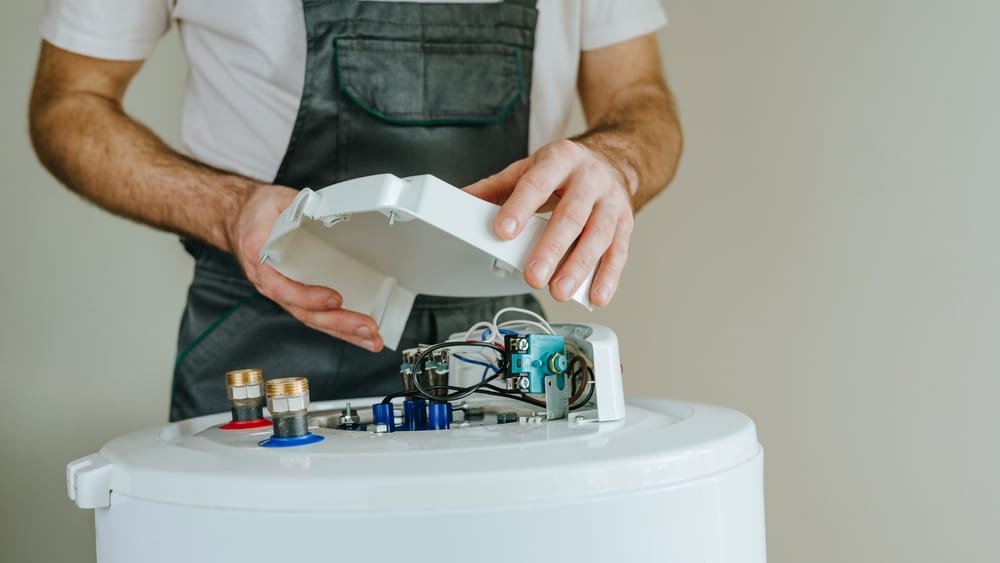
Electric water heaters use two heating elements (one near the top of the tank and one near the bottom) to heat water directly. Sediment tends to accumulate around the lower element and reduce its effectiveness over time. Annual tank flushing and periodic replacement of elements that show signs of failure are the primary maintenance tasks.
Gas Water Heater
In addition to tank flushing and anode inspection, gas water heaters require an inspection of the flue and exhaust vent to make sure it is not obstructed. A blocked exhaust vent can create a carbon monoxide hazard inside your home. Have a licensed plumber or certified technician check the venting as part of your annual maintenance.
Tankless (On-Demand) Water Heater
Tankless water heaters do not require tank flushing since they have no storage tank. However, they are sensitive to hard water scale buildup inside the heat exchanger. Annual descaling using a vinegar solution or a specialized descaling product is recommended to maintain heating efficiency. Inlet filters should also be cleaned on a regular basis.
Signs Your Water Heater Needs Attention
Even with regular maintenance, a water heater will eventually reach the end of its useful life. Watch for these warning signs.
Lukewarm or cold water despite a high thermostat setting: this may indicate a failing heating element (electric units), a thermocouple problem (gas units), or a tank so heavily fouled with sediment that it can no longer transfer heat efficiently.
Rumbling, popping, or banging noises: these sounds typically come from hardened sediment cracking under heat. Flushing may temporarily reduce the noise, but if it persists, the tank is often beyond repair.
Rusty or foul-smelling water: reddish or rust-colored water can indicate advanced internal corrosion or a depleted anode rod. A sulfur or rotten-egg smell may point to sulfate-reducing bacteria in the tank.
Leaking around the base of the tank: a leak from the tank body itself is usually a sign of advanced internal corrosion and means the unit needs to be replaced. Leaks at connections or at the pressure relief valve can often be repaired.
The unit is more than 12 years old: the average service life of a well-maintained tank water heater is 12 to 15 years. If yours is approaching or past that range, it is worth planning for replacement before you face an emergency situation.
For questions about the condition of your water heater, our plumbing services cover inspection, maintenance, and full replacement for all types of water heating equipment.
When to Call a Professional Plumber
Some maintenance tasks can technically be handled by a capable homeowner. Others should always be entrusted to a licensed plumber:
- Replacing the pressure relief valve
- Diagnosing and repairing a leak
- Replacing a heating element or thermostat
- Inspecting gas connections and venting
- Full unit replacement
- Any situation involving a gas smell or suspected carbon monoxide
Annual professional servicing gives you confidence that every component is in good working order and that your system is operating safely. To schedule a visit, contact our team.
How Much Does Water Heater Maintenance Cost?
The cost of annual professional maintenance varies by region, unit type, and the tasks involved. In general, a complete inspection that includes tank flushing, anode inspection, and pressure relief valve testing is a worthwhile investment compared to the cost of an emergency replacement or water damage repair. Replacing a sacrificial anode rod is inexpensive but can add years to the life of your tank.
For practical plumbing tips and advice between service calls, visit our news section for the latest resources for Quebec homeowners.
Conclusion
Regular water heater maintenance is a simple, cost-effective habit that can save you hundreds of dollars in unnecessary repairs and premature replacements. Annual tank flushing, anode rod inspection, and pressure relief valve testing are the three foundational tasks that every homeowner should prioritize. If you are unsure about the current condition of your water heater or cannot remember the last time it was serviced, now is a good time to act.
Contact Plomberie Lalonde to schedule a water heater inspection and ensure your water heating system is in good working order.
Frequently Asked Questions About Water Heater Maintenance
How often should a water heater tank be flushed?
Once a year is the standard recommendation for most residential water heaters. In areas with particularly hard water, more frequent flushing may be beneficial.
Can homeowners perform water heater maintenance themselves?
Basic tasks like flushing the tank can be handled by a handy homeowner. However, replacing the anode rod, replacing the pressure relief valve, and any work on gas connections should be left to a licensed plumber for safety reasons.
How long should a water heater last?
A tank-style water heater that is properly maintained typically lasts 12 to 15 years. A tankless water heater can last 20 years or more with adequate care.
Why does my hot water smell bad?
A sulfur or rotten-egg odor is often caused by a reaction between a magnesium anode rod and sulfate-reducing bacteria in certain water supplies. Replacing the anode with a suitable model, or having the tank professionally disinfected, can help resolve the issue.
My water heater is making strange noises. Should I be concerned?
Rumbling or popping sounds are typically caused by sediment buildup at the bottom of the tank. Flushing the tank may reduce the noise, but if it is loud or persistent, have a plumber inspect the unit.
What temperature should I set my water heater to?
60 degrees Celsius (140 degrees Fahrenheit) is the standard recommendation to help limit bacterial growth inside the tank. A thermostatic mixing valve or anti-scald device should be installed to reduce the risk of scalding at the tap, especially where young children or elderly individuals live in the home.